
Why Should You Never Stand Between Nandi and Shivling?
❤️ Spread the Love
Visit almost any traditional Shiva temple and you will notice a familiar arrangement. Nandi, the sacred bull associated with Lord Shiva, sits directly facing the Shivling, his gaze seemingly fixed on Mahadev.
For many devotees, Nandi is much more than Lord Shiva's vahana, or divine vehicle. He represents unwavering faith, patience, loyalty and complete surrender to Shiva.
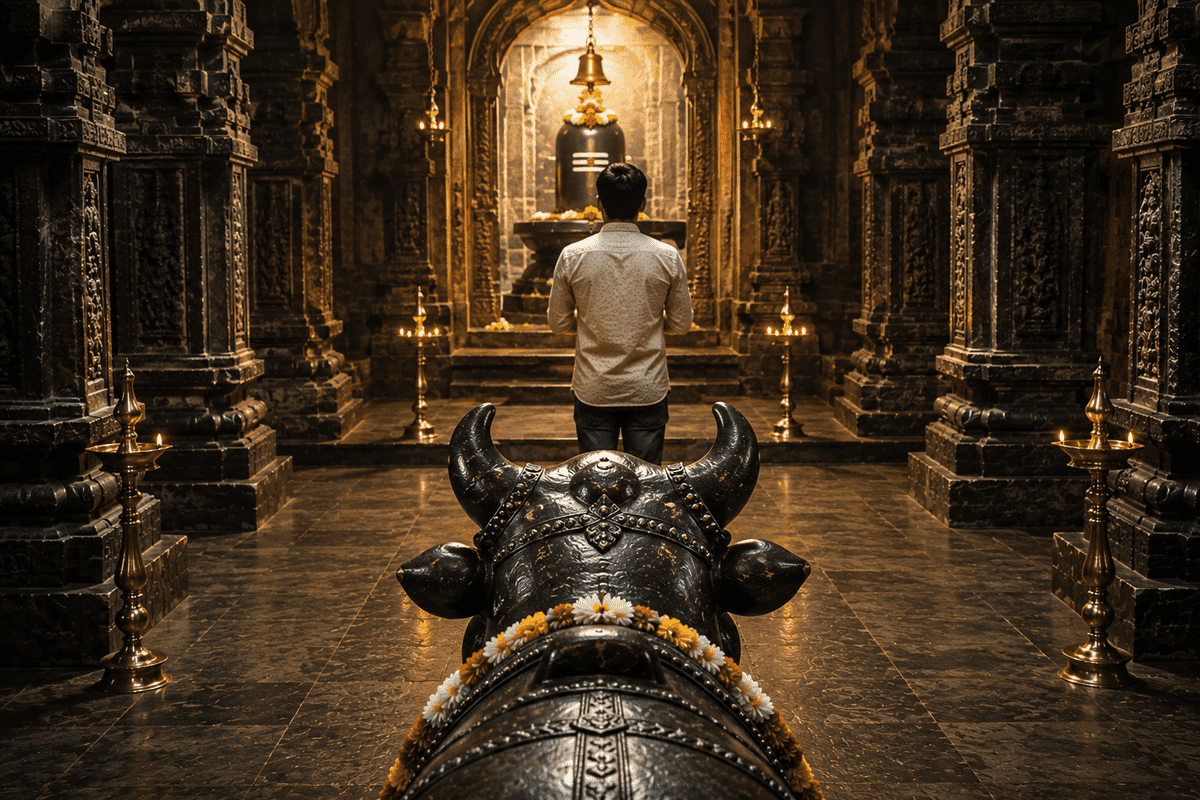
This sacred relationship is also connected with an important temple tradition. Devotees generally avoid standing directly between Nandi and the Shivling while seeking darshan.
But why is this done? Does standing between them carry any religious significance, and what can Nandi's constant gaze towards Shiva teach a devotee?
The answer goes beyond temple etiquette and reveals a beautiful lesson about devotion and concentration.
Why Does Nandi Always Face the Shivling?
In Shaiva tradition, Nandi holds a special place as Lord Shiva's devoted companion and vahana. This connection is reflected in the architecture of many Shiva temples, where Nandi is seated facing the main shrine.
His position carries deep symbolism.
Nandi does not look elsewhere. His attention remains directed towards Shiva, representing a state of complete spiritual concentration.
For a devotee, this posture becomes a silent lesson in one-pointed devotion.
We often enter a temple while carrying countless thoughts—work, family, finances, relationships and everyday worries. Nandi's stillness reminds us that worship is also an opportunity to quiet these distractions and focus the mind on the divine.
Why Should You Not Stand Between Nandi and Shivling?
According to a widely followed Shaiva tradition, devotees should avoid standing directly in the line connecting Nandi and the Shivling.
The belief is based on Nandi's uninterrupted devotion towards Lord Shiva. Since Nandi remains continuously focused on Mahadev, standing directly in front of him is symbolically viewed as interrupting this sacred gaze.
For this reason, many devotees move slightly to one side while having Shiva Darshan rather than positioning themselves directly between Nandi and the Shivling.
The custom is better understood as an expression of respect rather than fear.
It honours Nandi's devotion while simultaneously reminding the worshipper to approach Lord Shiva with the same sincerity and concentration.
The Deeper Meaning of Nandi's Unwavering Gaze
Nandi's position contains a spiritual message that extends beyond the physical arrangement of a Shiva temple.
His gaze represents Ekagrata, or one-pointed concentration.
The human mind rarely remains still. Even during prayer, thoughts about responsibilities, desires and worries can easily distract us.
Nandi represents the opposite.
He remains calm, patient and focused entirely on Shiva.
In this sense, the real lesson is not simply:
"Do not stand between Nandi and Shiva."
The deeper lesson could be understood as:
"Do not allow distractions to stand between your mind and your devotion."
Nandi therefore becomes an example of how a devotee can approach spiritual practice—with patience, steadiness and complete attention.
What Is Shringa Darshan?
Another traditional practice associated with Nandi and Shiva is known as Shringa Darshan, sometimes called Shrungadarshan.
The word shringa refers to a horn. In this devotional practice, the devotee seeks darshan of the Shivling in relation to Nandi's horns rather than blocking Nandi's direct view of Shiva.
The practice carries symbolic significance.
Nandi's attention is completely directed towards Mahadev. Seeing Shiva while acknowledging Nandi's position encourages the devotee to cultivate the same concentration.
However, temple traditions can differ significantly. The appropriate method of darshan should therefore follow the customs and instructions of the particular temple being visited.
Why Is Nandi So Important in Shiva Worship?
Nandi represents several qualities valued in spiritual life.
Stillness: Nandi sits calmly before Shiva, symbolising control over restlessness.
Patience: His posture suggests the ability to wait without losing faith.
Devotion: His eyes remain directed towards his Lord.
Strength: As a bull, Nandi naturally represents power, but his strength remains disciplined and peaceful.
Surrender: Despite his strength, Nandi's posture before Shiva reflects humility.
Together, these qualities make Nandi an important spiritual symbol rather than merely an architectural feature of Shiva temples.
Why Do Some Devotees Whisper Wishes Into Nandi's Ear?
You may have noticed devotees quietly whispering prayers or wishes into Nandi's ear at certain Shiva temples.
According to popular devotional belief, Nandi's closeness to Lord Shiva makes him a symbolic messenger between the devotee and Mahadev. Some worshippers therefore express their prayers quietly to Nandi with the belief that their message will reach Shiva.
There is also a beautiful symbolic interpretation behind the practice.
Rather than loudly announcing one's desires, the devotee quietly expresses them. This encourages humility, sincerity and personal communication with the divine.
However, this practice is not universal. Some temples may have different customs or may discourage touching sacred images. Visitors should always respect local temple guidelines.
What Is the Right Way to Have Shiva Darshan?
Shiva worship differs across regions and traditions, so there is no single method followed everywhere. Still, a few simple practices can make the experience more mindful.
Enter the temple calmly and respectfully. Avoid unnecessary conversations and distractions around the sanctum.
Acknowledge Nandi before approaching the Shivling. If the temple follows the tradition of keeping Nandi's direct line towards Shiva unobstructed, move slightly to one side for darshan.
Look at the Shivling with concentration and join your hands in prayer. Chanting "Om Namah Shivaya" silently or aloud can help focus the mind.
After darshan, closing the eyes briefly and remembering Shiva internally can turn an external act of worship into a moment of meditation.
The spiritual progression becomes:
See Shiva → Offer Prayer → Turn Inward → Meditate
What If You Accidentally Stand Between Nandi and Shivling?
Devotional customs should encourage awareness—not anxiety.
Shiva temples can become extremely crowded, especially during Sawan, Mahashivratri and Mondays. A devotee unfamiliar with temple traditions may also accidentally stand directly between Nandi and Shiva.
There is no need to panic.
If you notice the position and the temple observes this custom, simply move respectfully to one side.
The purpose of the tradition is to cultivate reverence and mindfulness. Turning it into fear can distract from the very devotion it is meant to encourage.
Is This Tradition Followed in Every Shiva Temple?
Not necessarily.
India has countless Shiva temples representing different architectural styles, regional customs, sectarian traditions and local practices. The positioning of devotees and methods of darshan can therefore vary.
The practice of avoiding the direct Nandi-Shivling line is widely recognised in Shaiva devotional tradition, but it should not be presented as a ritual followed identically in every temple.
When visiting an unfamiliar temple, observing local devotees or following instructions given by temple authorities is usually the most respectful approach.
The Life Lesson Hidden in Nandi's Devotion
Perhaps the most powerful aspect of this tradition becomes visible only when we look beyond ritual.
Nandi teaches focus.
Modern life constantly demands our attention. Notifications, work pressures, relationships, ambitions and worries pull the mind in different directions.
Yet Nandi remains still.
His eyes remain fixed on Shiva.
For a devotee, this can represent the importance of finding something higher than temporary distractions and remaining anchored to it.
The lesson can also extend beyond worship. Patience, discipline, loyalty and concentration are qualities that can strengthen careers, relationships and personal growth.
Nandi's devotion therefore becomes both a religious symbol and a reminder of how steadiness can transform everyday life.
Conclusion
The tradition of avoiding standing directly between Nandi and the Shivling carries a simple yet meaningful spiritual message.
Nandi's uninterrupted gaze towards Lord Shiva represents complete devotion, patience and one-pointed concentration. By keeping this symbolic line unobstructed, devotees show respect for Nandi's devotion while reminding themselves to approach Mahadev with similar focus.
More importantly, the tradition invites us to look beyond ritual.
The next time you enter a Shiva temple, notice Nandi before rushing towards the sanctum. Observe his stillness and the direction of his gaze.
His silent posture carries a powerful message:
True devotion is not merely about standing before the divine—it is about learning to keep the mind there.
Frequently Asked Questions
Why should devotees not stand between Nandi and Shivling?
Why does Nandi always face Lord Shiva?
What is Shringa Darshan?
Is it wrong to accidentally stand between Nandi and Shivling?
About the Author
Himanshu Mishra
@himanshu.mishra@paymeindia.in
View all posts →